About Dance from the Heart
The best place to read about Dance from the Heart on their dedicated website here.
Keep reading for more information on my relationship with Dance from the Heart and We Still Move.
I first encountered We Still Move (WSM) back when they were called Critical Mass Dance Company. They offered a class series called Dance from the Heart class. Many of my loved ones and I were still reeling from the public execution of George Floyd. I’d just been part of a mass employee walkout at the pole dance studio where I worked over their entirely performative and hypocritical response to it.
An acquaintance recommended Dance From The Heart as a way to get back in touch with movement. I was both hurting and looking for ways to divest from any and all of the harmful practices I’d been steeped in for so long at the pole studio. After one series, I was so impressed with the gentle, supportive, affirming, make-it-your-own nature of the class, and was so so so grateful to receive a full scholarship into their teacher training program.
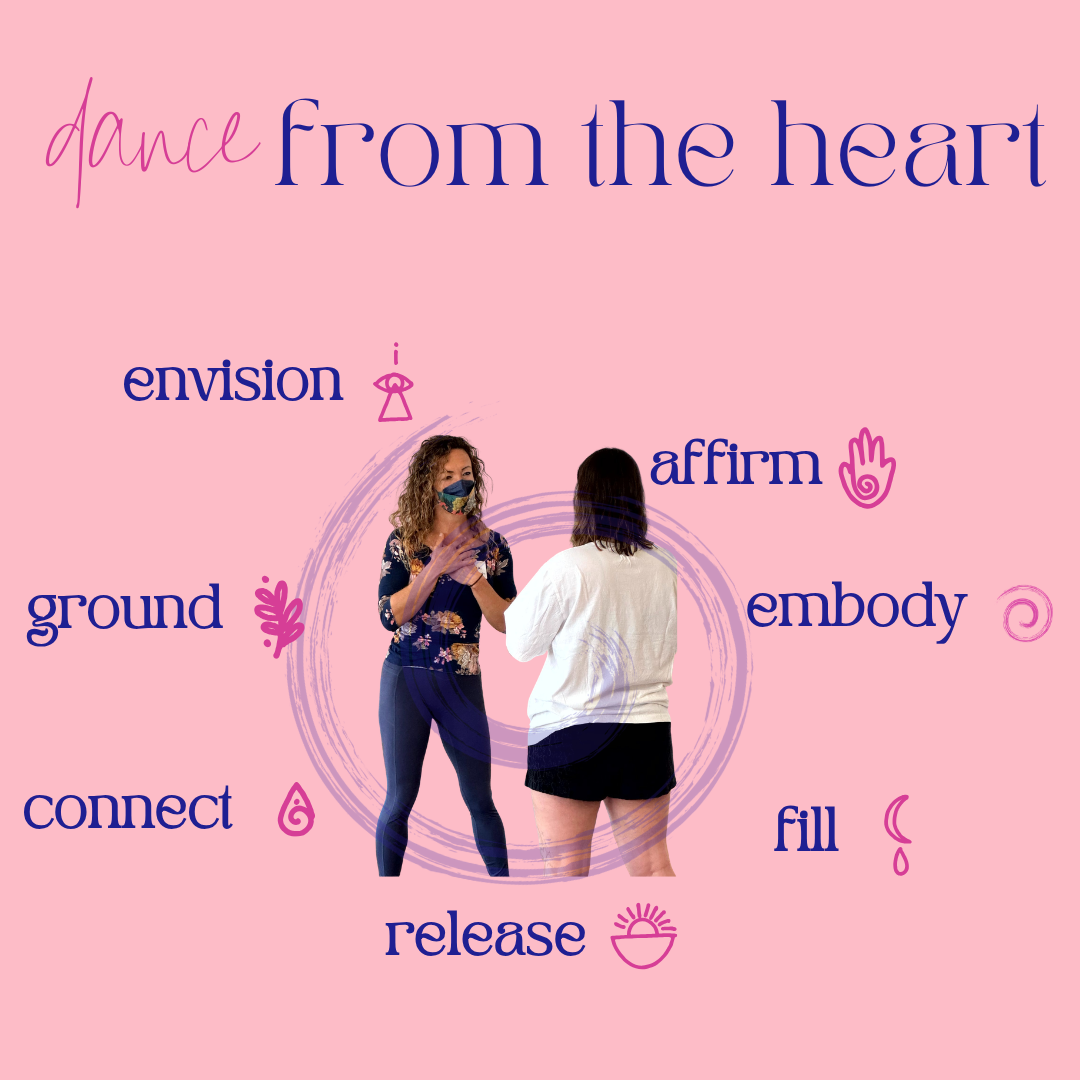
WSM’s movement modality, Dance from the Heart (DFTH), is a trauma-informed, community-based embodiment practice designed to support us in reconnecting to our own bodies, spirits, and dreams for our lives and the world. And that trauma-informed approach extends beyond class participants and into our staff as well–something I’ve never been able to say about anywhere else I’ve worked.
Even before I was trained in what it means to have trauma-informed practices, I felt a safety and ease working for WSM that has only blossomed. And after I learned what it meant to practice from a trauma-informed place, I was able to put to words why I felt that way.
Trauma-Informed Principles in Action: Working with We Still Move
Working with We Still Move (WSM), I’ve witnessed and experienced trauma-informed principles for myself in a workplace for the first time in my adult life. This experience in and of itself helps me continue to heal my relationship with being in community.
WSM’s movement modality, Dance from the Heart (DFTH), is a trauma-informed, community-based embodiment practice designed to support us in reconnecting to our own bodies, spirits, and dreams for our lives and the world. And that trauma-informed approach extends beyond class participants and into our staff as well–something I’ve never been able to say about anywhere else I’ve worked.
The Substance Abuse and Mental Health Services Administration (SAMHSA) lists 6 guiding principles for implementing trauma-informed practices:
Safety
In both DFTH and in working with WSM, I’ve never felt like I had to push through discomfort in order to “get it.” I’m encouraged to choose what feels safe and good for me. In DFTH, participants are never prompted to “dig into” or re-experience any traumas they’ve experienced, or to do anything that they don’t feel completely ready to do. And, nor is the “skill” / “value” / “progress” of their practice determined by how much “processing” they’ve done around their trauma.
Trustworthiness and Transparency
As part of every DFTH class, the agenda is covered at the beginning, followed by community agreements, and a demo before we even get started with movement. This way, people know exactly what they’re walking into. In working with WSM, there is a culture of building trust through being transparent–I never feel like I’m being judged or undermined, and uncertainty is navigated with transparency and clear communication.
Peer Support
DFTH is done in community. We never ask people to go into the details of a traumatic experience, we heal as much as we have space for in the moment just by gathering to connect with our bodies and affirming that we deserve support, healing, and empowering community. As an employee, we are also allocated 1 hour of paid self-care every week, with monthly opportunities to meet up and co-support each other in taking care of ourselves. As a further example, this is the first workplace I’ve ever been in where taking time off for my menstrual cycle was not only allowed but supported and encouraged.
Collaboration and Mutuality
While there is always a facilitator, they are just that–they facilitate what participants’ bodies already innately know how to do–which is to connect with movements and inner energies that help us feel safe enough to both discern our dreams and feel more and more comfortable calling them in for ourselves. There’s no hierarchy, and the space is co-created by our shared commitment to taking care of ourselves and each other. Implementing similar principles, our Wisdom Circle (board) meets regularly and is always scheduled in advance so that people have ample space to attend meetings and feel resourced enough to participate in important decisions.
Voice + Choice + Agency
In DFTH, everything is an invitation, and we celebrate people’s yes’s as much as we celebrate their “no thanks.” We provide options for people to choose from and honor the choices they make in their dance–even if it doesn’t look like what the facilitator or other participants are doing. We know that each person is the expert of their own experiences, and we honor that they get to define what feels like progress for them. We just create one of many possible spaces for people to practice their own agency in manifesting their dreams.
Cultural Humility
Where I’ve particularly experienced this is that I’m not expected to speak as a monolithic representative of Black folk. Or Filipino folk. Or mixed folk. Additionally, DFTH accounts for the very real needs of populations such as survivors, those who have chronic illnesses, and various populations of color. DFTH class structure and WSM organizational structure are both tailored to encourage people to draw on their own experiences and heritage to move in a way that is meaningful to and inclusive of their own cultural practices.
There’s so much more to being trauma-informed than what’s mentioned here. Collectively, acknowledging that this is always a work in progress–a constant practice–helps keep these values present and alive in all the considerations we make as a company. WSM demonstrates how important and impactful it is for businesses that aren’t “therapy” to still have trauma-informed practices–for both participants and employees.
There was a time where I didn’t known whether WSM was somewhere I’d be forever, but this space made me feel safe enough to be excited about what’s was (and still is) the horizon, to be part of whatever those plans may be, and valued enough to be vulnerable in the co-pursuit of our collective visions.
Now, I can confidently say that the work I've been able to do with them over the past 5 years has been some of the most fulfilling, healing, and hopeful work I've ever had the privilege to be involved in. Our small team has always been supportive in whatever I've needed over the years--including enthusiastically supporting my move to the Netherlands while making arrangements to continue contracting my services through my Dutch business.
KVK: 99536560